The green cross is regulated, on duty around the clock, and not remotely comparable to a Boots.
The pharmacy sign means more than a shop
What the cross actually means
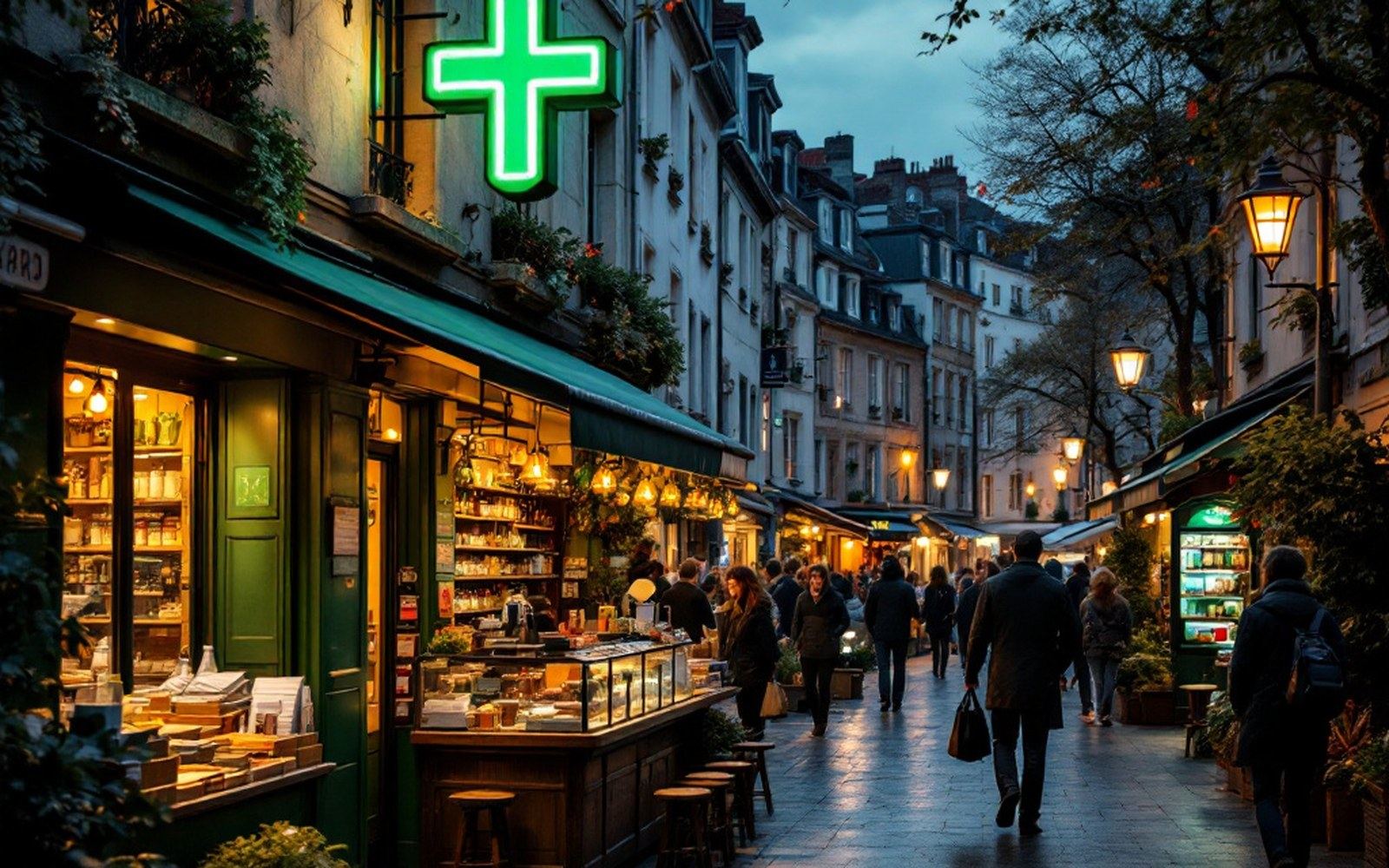
France limits pharmacy numbers by population — roughly one per four thousand five hundred inhabitants — so the glowing green cross outside is a licensed monopoly, not a retail choice. You cannot open one simply because the high street needs it; the numerus clausus applies strictly, and a town that feels underserved often genuinely is.
That scarcity comes with obligations. Every pharmacy in a given area belongs to a rota — the garde — which determines who stays open on Sundays, public holidays and through the night. The pharmacies that are closed post a notice in the window naming the neighbour that is on duty. If you arrive at a darkened cross on a Sunday, you are not unlucky, you are simply at the wrong one. The right one is displayed on the door or, these days, searchable through the official health portal run by the French government.
The pharmacist's role extends well beyond dispensing. French pharmacies sell prescription medicine but also an unusually wide range of parapharmaceuticals — wound care, medical supports, infant formula, specific cosmetics and, critically, advice. Walking in with a rash, a wasp sting or a child's fever and asking the pharmacist directly is genuinely the intended first step. They are trained clinicians, not shop assistants, and will refer you to a doctor when the situation calls for it.
One habit worth forming early: French pharmacists are among the few professionals legally authorised to identify wild mushrooms, and in autumn rural pharmacies will check a basketful without appointment. It is one of the stranger inherited duties — and a real one.