Alsace didn't choose its architecture — it was assigned it by history, then reassigned, then kept what it had.
You can read the border in the pitch of a roof
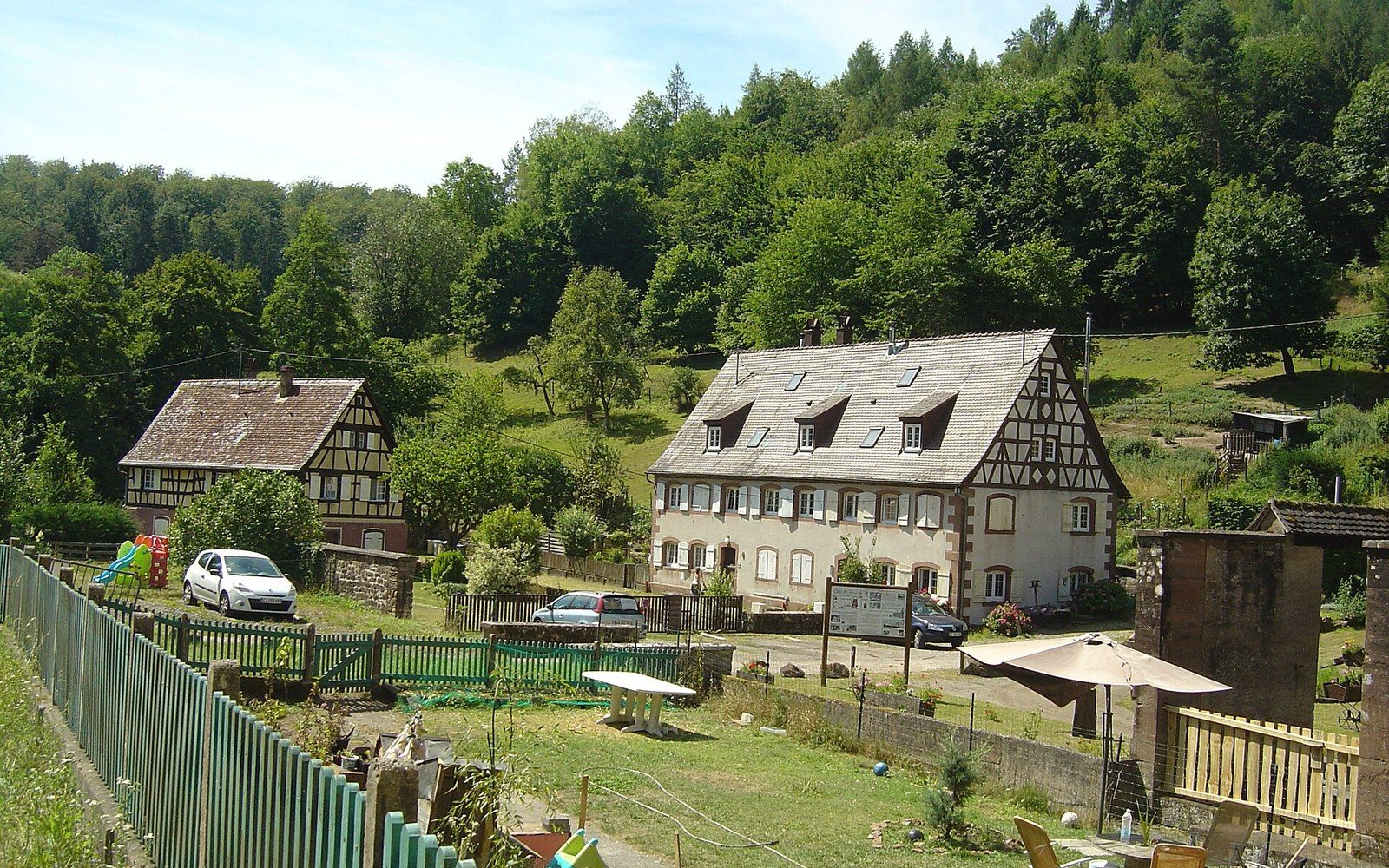
The roof tells you where you are
Cross into Alsace from Lorraine and the roofline changes before the language on the signs does. The pitch steepens sharply, the tiles go from flat Roman to steep interlocking Biberschwanz — beaver-tail tiles, so called for the rounded lower edge — and the gables swing to face the street rather than the ridge. Half-timbering appears not as decoration but as structure, with the colour of the infill panels varying by village in ways that locals still argue about. This is not a heritage project. It is what happened when a region spent roughly three centuries alternating between French and German sovereignty, absorbing building traditions from whichever state was currently in charge, and then stopped switching before anyone had time to standardise.
Alsace was French from 1648, German from 1871, French again from 1918, German again from 1940, and finally, definitively French from 1944. Each transfer brought administrators, craftsmen and norms. The steep roofs suit a climate that is genuinely continental — colder winters than Paris, heavier snowfall — and the forms that survived were the ones that worked, regardless of which flag flew over the préfecture in Strasbourg. What you see walking through Riquewihr or down the Grande Île in Strasbourg is not a theme park reproduction of Germanic townscape; it is the actual built result of that back-and-forth, which is why it looks so unlike anything else in France.
What the wine bottles remember
The same logic runs through the vineyards. Alsace is the only major French wine region that labels its bottles primarily by grape variety rather than by appellation — Riesling, Gewurztraminer, Pinot Gris — which is the German convention, not the French one. The bottles themselves are tall, slender and green, the flûte d'Alsace shape, legally defined and distinct from the Burgundy or Bordeaux silhouette. The Alsace wine appellation dates formally to 1962, but the labelling habits it codified were already old by then: vintners had been selling by varietal name through German ownership, and nobody saw reason to change a system their customers understood.
This is the thing that consistently surprises newcomers to France expecting a uniform national logic. France is one country, but it absorbed its current territory slowly and unevenly, and the absorbed parts did not always drop their prior habits. The Grand Est administrative region, created in the 2016 merger, put Alsace, Lorraine and Champagne under a single préfecture — which produced enough local fury that Alsace was effectively given back its own Collectivité d'Alsace in 2021, a distinct authority short of a full région but more than a département. The administrative map and the cultural map have never quite aligned here.
What stays untranslated
The villages nearest the Rhine still carry names that sit awkwardly in French phonetics: Wissembourg, Ribeauvillé, Guebwiller. Street signs in Strasbourg run in French, but the neighbourhood names — Neudorf, Robertsau, Koenigshofen — have not been translated because there is nothing to translate them into; they were named in Alsatian, a Germanic dialect that the regional languages law and decades of French schooling never quite extinguished. Alsatian is not German, though a German speaker can follow it; it is the regional tongue that survived by being useful on both sides of a border that kept moving.
Move to Strasbourg and you will hear it occasionally from older residents, see it on some shop signs, and encounter it as a quiet marker of where someone's family roots actually lie. You will also notice that the boulangerie sells both a baguette and a prétzel — spelled that way locally, no points off — and that neither product finds its presence remarkable. The region long ago stopped finding the mixture strange. It is, by now, simply what Alsace is.